The Dryhead Agates were named
after
many bison skulls found near the site. That was where
the Native Americans
were said to run the bisons over the cliff, killing many
of them, and then
arranging the bison skulls in ceremonial manner. The
agates come in form
of dark colored concretion nodules found in the
shale(mudstone) bed, and because of
overlaying hard limestone bed, it takes some hard
digging to obtain the
nodules and only a small percentage of the nodules was
said to be of any
good. It used to be a fee collecting site in 1970s, and
there had been
changes in the ownership of the site. There was some
mining activities using the
heavy machines. Currently, it appears that the owners of
the area is not
interested in allowing anyone to dig for the agates. There are
several other deposits including one in-sited in a
Native American Reserve so any diggings are not
permitted there.
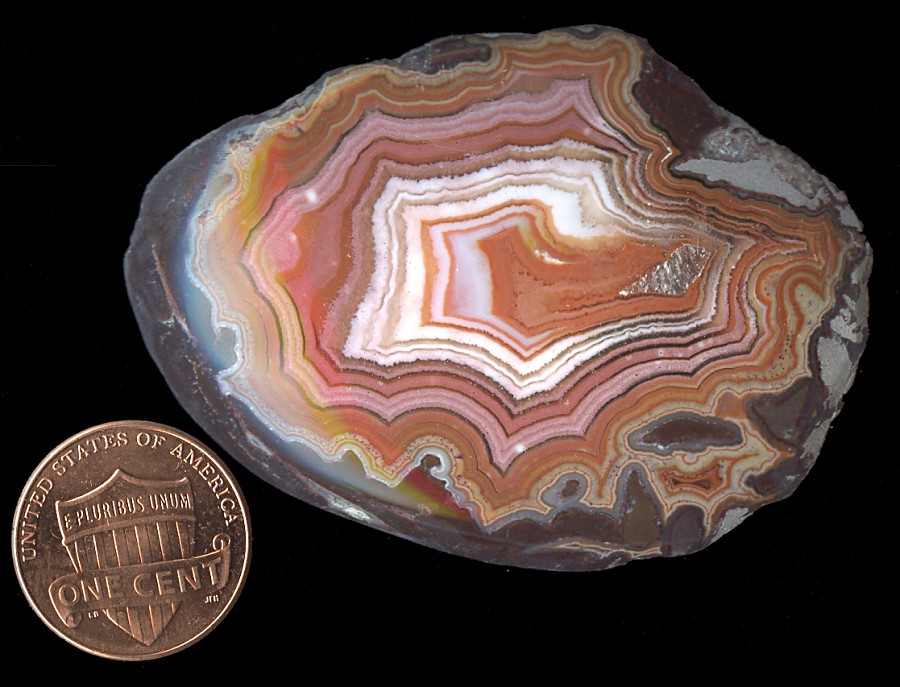
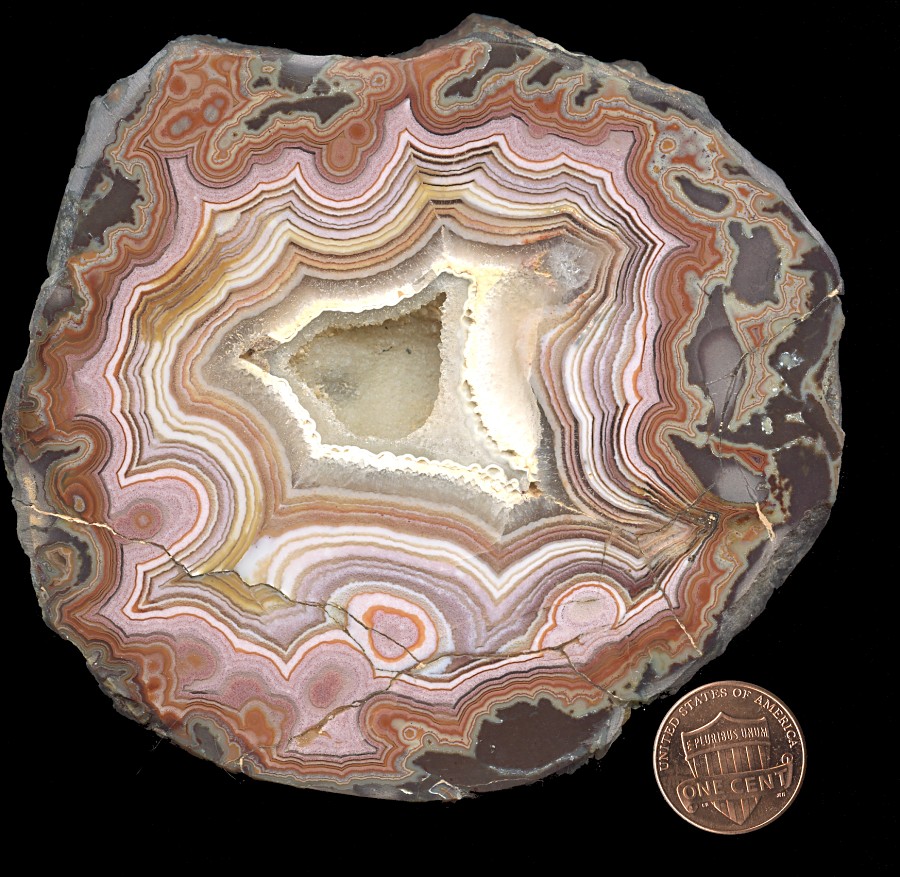
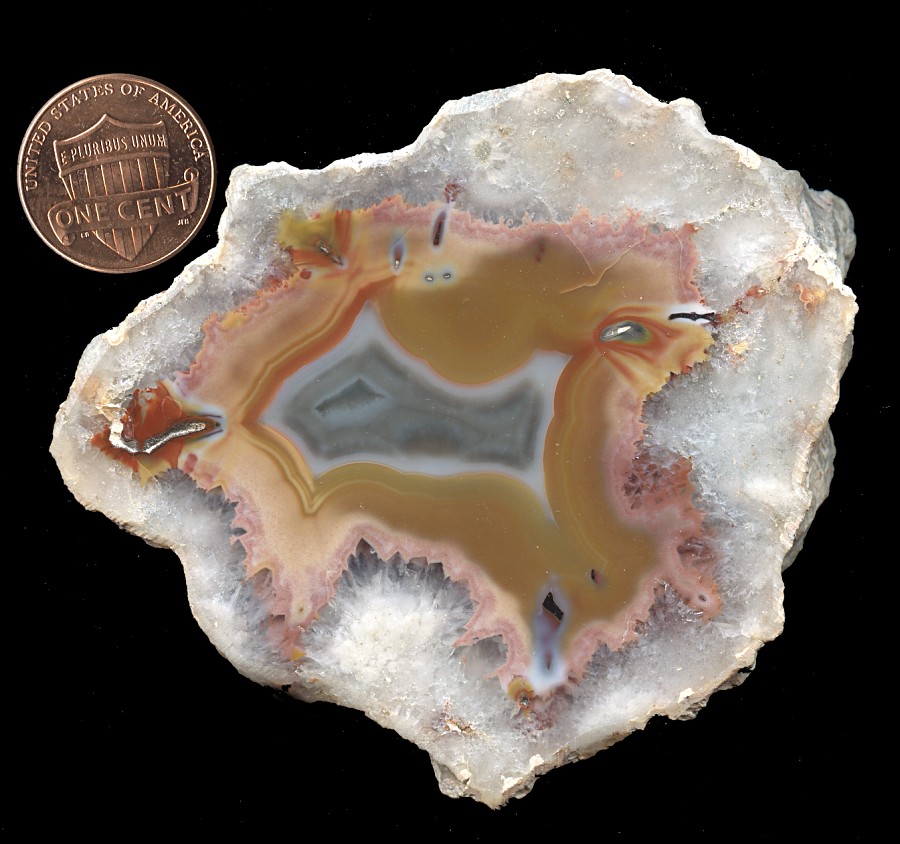
The
typical color of the Dryhead
agates are brownish orange, but they can also come in
the yellow, red, pink,
gray, lavender and white colors. The color combo of
orange, red, pink and
white is the most desirable. It's typical for the
Dryhead agates to contain
interlaying of quartz and agate which apparently
supports a concept that the
agates may have been formed by successive layering in
respect to the wet and
dry seasons. The
Dryhead agates have an
interesting form of fluorescence. The quartz bands of
the orange Dryhead
agates (without pink/white cores) strongly fluoresce
green, hence, the
glowing neon green "contour lines" against dark non
fluorescing bands under
ultraviolet light.
For further reading, please refer to
John Hurst's Book:
Dryhead Agate: An Inside Look at History, Mining and
Natural Beauty of Agates from Montana's Dryhead
Region.
YOU CAN CLICK
ON THE PICTURES
TO SEE LARGER PICTURES
Rough Appearance: Disc-like gray nodules sometimes with
orange
agate showing (dead-giveaway)
Agates are typically orange colored,
sometimes come with white, pink
and yellow. Always interlaying with quartz bands.